|
|
|

dedicated to promoting and preserving the breed through responsible ownership,
breeding and training
|
|
Black
Skin Disease
|
American Kennel Club Canine Health Foundation
three
universities had research ongoing at the time this post was made
The
AKC CHF will match funds donated to projects that come under its
umbrella.
You
must specify the type of research, or research project you wish
to support with your donation.
About A Previously Approved
Grant No. 2290:
Mapping Canine X Chromosome Linked Alopecia:
Gary Johnson, DVM, Ph.D., University of Missouri, Columbia
Lay
Abstract: Many young Pomeranians develop a luxurious puppy
or first hair coat which fails to shed and is not replaced by an
adult coat. As the puppy coat ages it breaks off and falls out and
can result in a dog that is hairless over much of its body. This
disease is sometimes called black skin disease, coat funk or
woolly coat. It also occurs in Keeshonden and Alaskan Malamutes.
Although females can have the disease, it is much more common in
males. This suggests, but does not prove, that the mutation
responsible for the disease is on the X chromosome. We propose to
determine if a DNA marker from the canine x chromosome associates
with the disease. If so, this marker could then be used to
distinguish genetically normal puppies from puppies that are
likely to develop the disease. This marker could also identify
female puppies that will not develop the disease but are likely to
pass the disease on to the next generation.
The application was approved for funding in the amount of $18,000
pending support from clubs and/or individuals in the amount of
$13,500.
Update June 2008 : The AKC-CHF Grant 2290 officially drew to
close before 2007. Using the existing technology at that time,
Dr. Johnson could come to no conclusions about Alopecia X.
However, there have been recent advancements of technology and
further developments of mapping the canine genome. Dr. Johnson,
the AKC-CHF, and the PCT remain open to putting together future
continued studies of Alopecia X.
Presently, Dr. Leeb at the University of Bern, Switzerland is
preparing blood samples to undergo DNA studies commencing in
2009. The leading laboratory with the state of the art
technology will be used at the Broad Institute in Massachusetts.
This is the same lab that Dr. Elaine Ostrander’s group conducts
the NIH canine genome project. The cost of this study will
have to be covered by a combination of sources. These include
but are not limited to the AKC-Canine Health Foundation and the
Pomeranian Charitable Trust.
Considering the elusive nature of this coat condition, it is
wise to encourage as many scientists as possible into studying
it. We are not able to predict who will be the one to first make
headway into finding any answers. To check what is currently
happening with studies relating to Alopecia X and their funding,
please refer to the
Pomeranian Charitable Trust website referenced below.
Your
financial donations to the AKC-CHF can be donor designated for
Pomeranians. Your financial donations to the PCT will be solely
used for Pomeranians but can be further designated for Alopecia
X research. PCT funds have the flexibility to be donated through
the AKC-CHF to be then matched in amount by them and can be made
in combination of other breeds with similar concerns. This is
necessary to cover studies costing very large amounts. Or the
PCT could opt to spend some of their funds directly on needed
incidentals of the researchers which are not covered by the type
of grants that CHF make.
Many
thanks for this update to
Marge
Kranzfelder
PCT Trustee, APC Board Advisor (as former
President)
Marge can be contacted at
kranzmar@hotmail.com
or 831-623-9265.
|
|
Pomeranian Charitable Trust
This is an
especially informative site for new Pom people just first
hearing about Alopecia X
but also a
place for any new information to appear for veteran Pom people.
The PCT supports research taking place under
the AKC CHF umbrella.
|
|

A
Synopsis of the American Pomeranian Club’s Involvement
with
the Black Skin Disease in the Pomeranian Breed
When
the American Pomeranian Club formed a Health and Genetics
Committee several years ago, the committee was given "the alopecia problem" as its primary charge. Not that it
is our only concern, but APC felt it was the most troublesome
problem peculiar to our breed. We have chosen to officially use "Severe Hair Loss Syndrome" as its nomenclature since we
don't know how many similar conditions with various causes there
might be and we didn't want it to be confused with conditions
other breeds call "black skin disease," such as that
found in dachshunds.
We
had to establish an attitude change among our breeders. Following
Dr. Carmen Battaglia's advice, we offered this doctrine: Once a problem is noted generally throughout the breed, it is pointless
to look backward to find "a culprit" and finger point.
One must go forward and breed out the problem. Have the conviction
that whatever humans have bred into a Breed has the capability of
being bred out of that Breed.
The
outpouring of generosity of fund raising at our last two Nationals
has indicated we have advanced greatly on this open mindedness. It
has been heartening that our Canadian friends have been so
generous in financial support offered by the
Portage Legacy Project. The serious breed competition of
the Canadians has been matched by their genuine concern for the
Breed.
The
American Kennel Club - Canine Health Foundation put together a
grant offer combining several Nordic breeds which seem to display
this problem similarly. This combined funding is going to Dr. Gary
Johnson at
University
of
Missouri
to search for DNA research. Dr. Johnson is a
leading DNA researcher who also is a dog fancier himself. He has
established DNA breakthroughs in other breeds. He is also
conducting research on epilepsy. He is particular suspicious that
the Severe Hair Loss Syndrome might be located on the X
chromosome. The Canine
Health Foundation matches a percentage of funds donated through
the breeds' Parent Clubs. (The American Pomeranian Club is a
Parent Club of the AKC.)
Finding
a DNA marker would enable the breeders to conquer this problem.
However, it is not the whole solution. The
University
of
Missouri
is the "DNA specialist". We also need
answers about morphology and clinical treatment. Recently, APC has
heard that Dr. Linda Frank is interested in addressing these
concerns at the
University
of
Tennessee
.We are attempting to establish a dialogue
among these two universities. Since communication does not readily
exist among the scientific researchers in general, we are also
trying to establish communication with researchers in
Great Britain
.
The
APC Board has decided it was time to establish a separate
charitable foundation to support all these functions more readily.
Until this is complete, we will continue to funnel our financial
support through the AKC Canine Health Foundation.
How
can breeders personally help? The study at the
University
of
Missouri
needs Pomeranian blood samples for DNA
purposes. Liz Hansen is the project coordinator at the
University
of
Missouri
. Since we still have not established whether
Pom alopecia has one or more causes, she has also put together a
survey which is easy to fill out. Forms and instructions for
either the survey or blood samples can be downloaded from their
website www.CanineGeneticDiseases.net.
They need DNA samples from both affected and unaffected dogs, but
related samples of three generations are especially needed.
She
suggested sending in blood samples the same time that blood is
drawn for heart worm testing. Instead of blood, they could also
use tissue samples taken at time of any needed surgery such as
spay or neutering. One advantage of participating in the study is
that they would not charge for DNA testing of that individual once
a test is established. The commercial rights to this test is their
incentive for the research. But think of it this way, they must be
committed to the possibility that they can establish this test.
That is positive for our mutual purpose.
Liz
Hansen can be contacted at HansenL@missouri.edu
or by calling 573-884-3712
Marge
Kranzfelder
APC
Health & Genetics Chair
APC
Board Member
APC
AKC Delegate
If
I can be of further assistance, I can be contacted at
kranzmar@hollinet.com
or 831-623-9265.
Click
here to see what BSD looks like in an otherwise absolutely
gorgeous Pomeranian
http://www.mbfonline.com/bsdauction/rocky.htm
Alopecia X Research Project in Europe
--------------------------------------------------------
There is a new research project on Alopecia X in Europe.
Research is done by Prof. Dr. Tasso Leeb at the Institute of Genetics,
University of Berne, Switzerland.
He is looking for the genetic marker for
the coat loss problem Alopecia X
(also known as Black Skin Disease in
Pomeranians) and has already started
collecting blood samples of affected
dogs.
Prof. Dr. Leeb and his team are looking for samples of affected dogs and
their close relatives.
Any participation is greatly appreciated.
The study is not restricted to Pomeranians, but will include dogs of any
other affected breeds.
Information for participating is on their website:
ENGLISH:
Research project on Alopecia X
>>> Alopecia X has been described in several breeds including Keeshonds,
Pomeranians, Alaskan Malamutes, Chow Chows and Miniature Poodles. Affected
animals suffer from hair loss, which usually starts at the neck and body of
the animal, whereas the head and front legs are typically spared.
Additionally, darkening of the affected skin areas may also be observed.
Symptoms typically show up between 1-5 years of age.
We would like to investigate the genetic causes of Alopecia X. For our
research we need DNA samples from affected dogs as well as their healthy
relatives. If you would like to participate in our research project, please
follow the instructions shown below. <<<
http://www.genetics.unibe.ch/content/rubrik/alopecia_x/index_eng.html
The
balance of this page is comprised of several papers on this topic.
Most of the articles are by Veterinarians, but there are also
articles by others knowledgeable in the Pomeranian breed, or on
this topic. If you know of an article that could aid our
understanding of this topic, we'd love to hear from you. Thanks to
Laurie Kinsman (Pomeranian breeder and member of the PCOC), for
agreeing to type the articles that are reproduced here. Just click
on any of the titles below to view that article.
List
of Titles
Growth
Hormone-Responsive Alopecia in Dogs
by
Clinon D. Lothrop Jr., DVM, PhD; and Lynn P. Schmeltrel, DMV
Canine
Growth Hormone-Responsive Dermatitis
by
Clinon D. Lothrop Jr., DVM, PhD
by
Charlotte Creed
Pathophysiology
of Canine Growth Hormone Responsive Alopecia
by
Clinton D. Lothrop, Jr., DVM, PhD
Virkon
Germicidal Skin Cleanser proven effective against Malassezia Pachydermatis
and Staphylococcus Intermedius
source:
www.antecint.co.uk
More
on Black Skin Disease
Article/Letters
as printed by the PCOC in the September 1997 Club Newsletter
|
ABSOLUTE
GROWTH HORMONE DEFICIENCY IS NOT PRESENT IN ALL CASES
Reprinted
from Veterinary Medicine Report St. Louis Vol. 2, No. 1, pp. 81
& 83, Jan.,1990 (Copyright
ã
1990, by The C.V. Mosby Company)
Clinton
D. Lothrop Jr., DVM, PhD, Associate Professor, Department of
Environmental Practice, University of Tennessee, College of
Veterinary Medicine, Knoxville, Tennessee.
Lynn
P. Schmeltrel, DMV, Diplomate, ACVD, Associate Professor of
Dermatology, Department of Urban Studies, University of Tennessee,
College of Veterinary Medicine, Knoxville, Tennessee
Growth
hormone-responsive alopecia of adult dogs is apparently a syndrome
of multiple causes. A
true growth hormone deficiency is not present in all dogs with
this disease. Adrenal
and gonadal steroid hormones and their biosynthetic precursors
contribute to hair loss seen in dogs with this syndrome.
The exact cause(s) of this syndrome are likely to differ in
the various breeds affected and must be defined before appropriate
and rational treatment modalities can be developed.
Canine
GH-responsive alopecia is an acquired alopecia of adult dogs.1-5
Its primary characteristics are a loss of primary hairs
with retention of secondary hairs.
This disease is seen most frequently in the Pomeranian,
poodle, chow chow, samoyed, keeshonden, and American water spaniel
breeds. The alopecia
can occur in dogs of any age but often develops at puberty.
Dogs with this syndrome are not dwarfed in stature, do not
have signs of systemic illness , and have normal thyroid and
adrenal function tests. There
is no proof of genetic inheritance of this syndrome, but the
predisposition of certain breeds suggests hereditary influences.
Siegel6
first described canine GH-responsive alopecia in 1977.
Siegel coined the term pseudo-Cushing’s
syndrome to describe this disorder because the alopecia was
similar to that seen in dogs that had Cushing’s syndrome.
The alopecia also resembles that seen with pituitary
dwarfs, which may account for the initial suspicion of adult-onset
GH deficiency in dogs with trunical alopecia but normal thyroid
and adrenal function.
GH-responsive
alopecia can be diagnosed by measuring serum GH concentrations
before and after stimulation with an a-adrenergic
agonist (clonidine, xylazine) or GH-releasing factor.1,7
The absence of a significant increase in serum GH concentration
suggest GH-responsive alopecia. Treatment is by subcutaneous
administration of human, porcine, or bovine GH for 4 to 6 weeks.1,8
Ninety-five
dogs with possible adult-onset GH-responsive alopecia that had
normal adrenal and thyroid function were evaluated with a GH
responsive test (Table 1). Only
63 of 95 dogs had a decreased GH response (Table 1).1
The 32 dogs with a normal GH response had the typical
moderate to severe trunical alopecia and hyperpigmentation, as did
the 63 dogs with a decreased GH response.
The normal GH response in some dogs suggests that a GH
deficiency is not always associated with this dermatitis.
Furthermore, serum levels of somatomedin C, which is
produced in response to GH and should be deceased in dogs with
true GH deficiency, were not decreased in dogs with an abnormal GH
response.1
|
Table
1. GH-Response
in 95 Dogs With
Possible
GH-Responsive Alopecia
|
|
|
Normal
|
Diminished
|
|
Poodle
(n=14)
|
2
|
12
|
|
Pomeranian
(n=15)
|
0
|
15
|
|
Chow
Chow (n=19)
|
14
|
5
|
|
Amer.
Water Spaniel (n=4)
|
2
|
2
|
|
Keeshond
(n=4)
|
3
|
1
|
|
Samoyed
(n=4)
|
1
|
3
|
|
Mixed
Breed (n=4)
|
1
|
3
|
|
Other
Breeds (n=31)
|
9
|
22
|
|
TOTAL
|
32
|
63
|
|
Source:
Lothrop CD Jr., Compend Cont Ed 1996:
10:1348-1352
|
Castration
has corrected the alopecia in some intact male dogs, even though
reproductive hormone levels and testicular histopathologic
findings are not abnormal. Other
male dogs (both intact and castrate) have responded, albeit often
temporarily, to testosterone replacement.
Thus we conclude that, although dogs may respond to GH
supplementation with hair regrowth, an absolute GH deficiency is
not present in all dogs with this syndrome.
The
Pomeranian breed is reported to have an increased incidence of GH-responsive
alopecia. However,
both normal Pomeranians and Pomeranians with GH-responsive
alopecia have a decreased GH response to the a-adrenergic
agonist xylazine and to GH-releasing factor.9 Since
normal and affected Pomeranians have decreased GH levels relative
to other breeds of dogs, the role of GH deficiency in affected
Pomeranians is not clear. Furthermore,
affected Pomeranians apparently have a non-classic
“late-onset” deficiency of the adrenal enzyme 21-hydrozylase.
The partial deficiency of 21-hydroxylase causes an
overproduction of steroid presursors such as progesterone,
17-hydorxyprogrestrone, androsternedlone, and
dehydrooephandrosterone sulfate.9
Elevated serum adrenal androgens have been associated with
male pattern baldness in women.10,11
The elevated adrenal progestins and androgens may
contribute to the alopecia seen in affected Pomeranians.
The adrenolytic agent o.p. DDD has to date been used
successfully to treat at least two Pomeranians with this syndrome,
confirming a role for the adrenal gland in the pathogensis of this
syndrome in Pomeranians.
In
summary, GH-responsive alopecia is an endocrine alopecia of adult
dogs of unknown cause. Although
an absolute GH deficiency may be present in some dogs with this
syndrome, it is unlikely to be the primary cause of hair loss in
some breeds. More
likely, multiple causes result in a similar clinical syndrome.
References:
-
Lothrop,
CD Jr., Pathophysiology of growth hormone responsive
dermatosis. Compend Cont Educ Pract Vet
1988:10:1346-1352.
- Eigenmann
JE, Patterson DF. Growth hormone deficiency in the mature dog.
J Am Anim Hosp Assoc 1984:20:741
- Parker
Scott DW. Growth hormone-responsive alopecia in the mature
dog: a discussion of 13 cases. J Am Anim Hosp Assoc
1986:22:467.
- Scott
DW, Walton DK. Hyposomatotropism in the mature dog: a
discussion of 22 cases. J Am Anim Hosp Assoc
1986:22:67.
- Campbell
KL. Growth hormone-related disorders in dogs. Compend Cont
Educ Pract Vet 1988:10(4):477-482.
- Siegel
ET. Endocrine diseases of the dog. Philadelphia: Lea
& Febiger, 1977
- Hampshire
J. Altszuler N. Clonidine or zylazine as provocative tests for
growth hormone secretion in the dog. Am J Vet Res
1981:42:1073
- Eigenmann
JE. Growth hormone-deficient disorders associated with
alopecia in the dog. In: Kirk RW, ed. Current veterinary
therapy IX.
Philadelphia: WB Saunders Co., 1966:1015.
- Schmeltzel
LP, Lothrop CD Jr. Evaluation of hormonal abnormalities in
normal coated Pomeranians and Pomeranians with growth hormone
responsive dermatosis. Proceedings AAVD, 1988:29-30
- Nelson
D. The acirenal cortex: physiological function and disease.
In: Smith LH, ed. Major problems in internal medicine. Vol.
XVII. Philadelphia: WB Saunders Co., 1980.
- Kasick
JM, Bergfeid WF, Steck WD, etal. Adrenal androgenic
female-pattern alopecia: sex hormones and the balding woman. Cleve
Clin Q 1983:50:111-122.
|
|
Back to List of
Titles
|
|
Clinton
D. Lothrop Jr., DVM, PhD, Knoxville, Tennessee.
Canine growth
hormone-responsive dermatosis, first described by Siegel in 1977,
is a rare endocrine alopecia of mature dogs.
The primary clinical features of this syndrome are
bilaterally symmetric alopecia and hyperpigmentation occurring
mainly on the trunk, caudal thighs, collar area, pinna, and tail,
while sparing the head and legs.
The alopecia is characterized y a retention of the
secondary hairs (undercoat) with a loss of primary hairs (guard).
Siegel coined the term pseudo-Cushing’s syndrome to
describe this disorder, because the alopecia resembles that in
Cushing’s syndrome. However,
dogs with uncomplicated growth hormone-responsive dermatosis have
normal hemograms, serum chemistries, urinalyses, and normal
results of adrenal and thyroid function tests.
Skin biopsies from dogs with growth hormone-responsive
dermatosis are characterized by histopathologic changes consistent
with an endocrine dermatosis; orthokeratotic epidermal thinning,
follicular ketarosis and telogenization, and subaceous gland
atrophy. Decreased
dermal elastin content has been suggested to be a histopatholgic
abnormality specific for growth hormone-responsive dermatosis but
is routinely seen only in dogs that have clinical signs for at
least 2 years. In
addition, a decreased dermal elastin content can rarely be seen in
other catabolic endocrine skin disorders, such as diabetes
mellitus and hyperadrenocorticism.
Growth
hormone-responsive dermatosis occurs predominantly in Pomeranians,
chow chow, poodle, water spaniel, keeshond, and Samoyed breeds but
can occur in any breed of dog.
The age of onset of growth hormone-responsive dermatosis is
most commonly between 1 and 2 years but can occur at any age.
There appears to be an increased incidence in male dogs of
certain breeds. The
hallmark of growth hormone-responsive is the correction of
integumentary abnormalities with growth hormone replacement.
Growth hormone-responsive dermatosis has been suggested to
be due to growth hormone deficiency occurring in the adult dog,
but the pathogenesis of this syndrome has yet to be defined.
Necropsy results for two dogs with grown hormone-responsive
dermatosis showed moderate atrophy of the pituitary gland in one
case. There is no
proof of a genetic inheritance of this syndrome, but the
predisposition of certain breeds suggests there may be hereditary
influences.
Endocrine
alopecia and dwarfism occur with growth hormone deficiency in the
immature dog. Pituitary
dwarfism occurs most commonly in the German shepherd and Carnelian
Bear Dogs and appears to be inherited as an autosomal recessive
trait. This disorder
differs from adult-onset growth hormone responsive dermatosis in
that partial to complete deficiencies of adrenocorticotropin,
thyrotropin, and gonadotropins are found along with the
somatotropin deficiency. Pituitary
dwarfs often appear normal until 2 or 3 months of age, at which
time failure to grow is noticed.
The hair coat often remains short because of inadequate
development of primary hairs.
The typical truncal alopecia and hyperpigmentation develop
in dwarf dogs with growth hormone deficiency.
Most dwarf dogs have a colloid-filled pituitary cyst at
necropsy, with secondary changes in other endocrine glands.
The alopecia of dwarf dogs will respond to growth hormone
supplementation, but longitudinal bone growth and increased
stature do not occur owing to closure of the growth plates.
If concurrent hypothyroidism is present, thyroxine
replacement is necessary to obtain optimal results.
Although the endocrine alopecia in dwarf dogs and dogs with
adult-onset growth hormone-responsive dematosis responds to growth
hormone supplementation, the presence of multiple pituitary
abnormalities in dwarf dogs and differences in pituitary
histopathology in these two syndromes suggests that the
pathogenesis of these syndromes may be different.
DIAGNOSIS
OF GROWTH HORMONE DEFICIENCY
The
diagnosis of growth hormone deficiency can be confirmed by
measurement of serum or plasma growth hormone.
Measurement of a basal growth hormone concentration is
inadequate to correctly diagnose growth hormone deficiency, since
many normal dogs have a low basal growth hormone concentration.
Therefore, a growth hormone response test should be
performed using the alpha-adrenergic agonist clonidine (10mg/kg).
These agents stimulate growth hormone release by inducing
production of endogenous growth hormone releasing factor (GRF).
Alternatively, human GRF (1 to 5 mg/kg) can be used to
stimulate growth hormone production.
To perform a growth hormone response test, 2 to 4 ml of
blood should be collected before at 15, 30, 45, 60 and 120 min
after intravenous administration of either clonidine, xylazine, or
CGR. After
collection, the blood should be promptly centrifuged and the
plasma (EDTA) or serum frozen at -20°C
until assayed for growth hormone.
Homologous canine growth hormone radioimmunoassays are used
to determine the plasma or serum growth hormone concentration.
The absence of a significant increase in the plasma or
serum growth hormone concentration is consistent with the
diagnosis of growth hormone deficiency.
Both
clonidine and xylazine are potent hypotensive agents and should be
used cautiously. Side
effects, at the recommended doses, range from mild drowsiness and
bradycardia to complete collapse, and last from 15 to 60 min.
If necessary, atropine can be used to correct the
bradycardia and the alpha-adrenergic antagonists phentolamine or
yohimbine can be used to antagonize the hypotensive and
hyperadrenocorticism effects of clonidine and xylazine.
Hypothyroidism and hyperadrenocorticism should be ruled out
with appropriate thyroid and adrenal function tests prior to
performing a growth hormone response test in a dog with suspected
adult-onset growth hormone-responsive dermatosis, since these
disorders can potentially induce a reversible growth hormone
deficiency.
CLINICAL
FINDINGS IN ADULT-ONSET GROWTH
HORMONE-RESPONSIVE DERMATAOSIS
A
growth hormone response test (using either xylazine or GRF as a
provocative stimulus) was eveluated in 95 dogs with suspected
adult-onset growth hormone-responsive dermatosis.
All animals were in apparent normal health, except for the
typical moderate to severe truncal alopecia and hyperpigmentation.
Thyroid and adrenal function test results were determined
to be normal in each animal.
A complete or partial lack of a growth hormone response was
observed in 63 of the 95 animals (Table 1).
A total of 32 breeds of dogs were represented in the 95
animals suspected of having adult-onset growth hormone-responsive
dermatosis. Several
breeds of dogs appeared to be predisposed to adult-onset growth
hormone-responsive dermatosis, including the chow chow, poodle,
Pomeranian, water spaniel, keeshond, and Samoyed.
Table
1. Reproductive Status and Growth Hormone Levels in 95 Dogs With
Suspected Growth Hormone-Responsive Dermatosis
|
|
R e p r o d u c t I v e
S t a t u s **
|
|
|
|
|
Breed*
|
M
|
MC
|
F
|
FS
|
Normal
|
Diminished
|
|
|
Poodle(
n=14)
|
5
|
4
|
1
|
4
|
2
|
12
|
|
|
Pomeranian
(n = 15)
|
7
|
3
|
1
|
4
|
0
|
15
|
|
|
Chow
chow (n = 19)
|
9
|
4
|
1
|
5
|
14
|
5
|
|
|
Water
spaniel (n = 4)
|
0
|
0
|
1
|
3
|
2
|
2
|
|
|
Keeshond
(n = 4)
|
1
|
1
|
1
|
1
|
3
|
1
|
|
|
Samoyed
(n = 4)
|
2
|
1
|
0
|
1
|
1
|
3
|
|
|
Mixed
breed (n = 4)
|
1
|
0
|
1
|
2
|
1
|
3
|
|
|
Other
breeds (n = 31)
|
14
|
3
|
7
|
7
|
9
|
22
|
|
|
Total
|
39
|
16
|
13
|
27
|
32
|
63
|
|
|
|
|
|
|
|
|
|
|
*n
= the number of different animals evaluated.
|
|
|
|
|
|
**
M, male; MC, male castrated; F, female; FS, female spayed
|
These
results suggest a decreased risk in intact female dogs and an
increased incidence in male dogs of the poodle, chow chow,
Pomeranian, and Samoyed breeds.
The finding of normal growth hormone response test results
in 32 of 95 animals with suspected adult-onset growth
hormone-responsive dermatosis suggests that a true growth hormone
deficiency may not be present in some dogs with this syndrome of
clinical alopecia. This
is particularly true in the chow chow and keeshond breeds.
Although these dogs usually respond to growth hormone
supplementation, other causes of the alopecia must be considered.
TREATMENT
Treatment
of adult-onset growth hormone-responsive dermatosis is by
subcutaneous growth hormone administration.
Human, porcine, and bovine growth hormone are effective in
treatment. Ovine
growth hormone was not effective in treating dogs, one of which
subsequently responded to bovine growth hormone.
Growth hormone should be administered at a dose of 0.1 U/kg
three times per week for 4 to 6weeks.
Alternatively,
dogs can be treated with 2 to 5 U(<14 kg body weight) or 5.0
units (>14 kg body weight) growth hormone administered every
other day for 10 treatments.
Hair growth should be seen within 4 to 5 weeks after
completion of therapy with either treatment protocol.
Growth
hormone is diabetogenic in all species, and dogs treated with
exogenous growth hormone can potentially develop transient or
permanent diabetes mellitus.
A fasting blood glucose level should be determined prior to
and at weekly intervals during growth hormone supplementation.
Growth hormone therapy should be stopped if persistent
hyperglycemia develops, or else permanent diabetes mellitus may
occur. Remission of
clinical signs following growth hormone therapy is variable and
ranges from 6 months to more than 3 years.
Growth
hormone-responsive dermatosis is an endocrine alopecia of adult
dogs of undefined etiology. Although
most dogs respond to growth hormone replacement, it is unlikely
that a true growth hormone deficiency exists in all dogs diagnosed
as having adult-onset growth hormone-responsive dermatosis.
Therefore, new treatment modalities will likely be
developed as the etiologies of this syndrome are defined.
References
and Supplemental Reading
Eigenmann,
J. E.: Diagnosis and treatment of dwarfism in a German shepherd
dog
J.
Am. Animal Hosp. Assoc. 17:796, 1961
Eigenmann,
J. E.: Growth Hormone and insulin=like growth factor 1 in the dog:
Clinical and Experimental investigations.
Domest Anim. Endocrinol 2:1, 1963
Eigenmann,
J. E.: Growth
hormone-dificient disorders associated with alopeica in the dog
In Kirk, R.W. (ed.) Current Verterinary Therapy IX,
Philadelphia, W. B. Saunders Co.,
1966, p. 1015
|
|
Back to List of
Titles
|
One
Cause of Severe Hair Loss
by
Charlotte Creed
Malassezia
yeasts are associated with inflammation of the ear canal, areas of
the skin that can rub together (i.e. neck, groin, arm pit), and
generalized seborrheic dermatitis
in dogs.
Dr.
Warren Jourbet, my veterinarian, has been working with what they
call the “black skin” in show Persian cats.
The conditions are similar to the ones we label as Severe
Hair Loss Syndrome. He
has consulted with Dr. Karen Morriello, a board certified
dermatologist associated with several veterinary medical schools.
Dr. Jourbert related that although Malassezia was mentioned
in veterinarian school, it has been just recently recognized as a
cause of severe hair loss and therefore been frequently overlooked
during diagnosis. Dr.
Jourbert contacted the veterinary school to find out how to
culture this particular yeast.
I
had taken two seven-year old dogs to him for hair loss.
They had not had any previous hair problems.
I also had a male and a female that seemed to be in early
stages of this problem. Their
symptoms appeared similar to cats Dr. Jourbert was studying and
treating. They were
diagnosed with the yeast infection Malassezia.
Unless
you look closely and frequently at your animal’s skin through
the coat, it is easy to miss the beginning stages.
Usually hair loss first gets your attention.
Some symptoms include itching (the dogs may scratch or rub
their backs or lie down and roll in the grass excessively).
There may be a yellow, oily,
dander material on the skin.
There may be a small reddish bump, ring worm like spot,
small crusty, dark brown area, or black spots or area.
Where these sign occur, the hair is damaged and eventually
lost. It usually
appears first under the arm pit, neck, chest, back legs, buttocks
(areas where dampness is likely to occur) and then progresses over
the entire dog. As in
other sources of major hair loss, further darkening of the exposed
skin results.
The
following is the recommended treatment that Dr. Jourbert found
successful for both dogs and cats.
Consult your Vet before using these as proper diagnosis is
always appropriate. Be
alert for any possible allergic reactions.
Treatment
Administer
1/3 capsule of 100 mg Sporonox daily for 2 weeks.
Continue this dosage twice per week if needed.
Do not breed any animal presently under treatment.
Bathe
all dogs, those affected and unaffected 2 or 3 times weekly in a
sulfur or anti-fungal shampoo suggested below.
Make sure all the skin appears clean.
Rinse them thoroughly.
After
the bath, use one of the dips listed below.
Allow the dip to dry on the coat, but it is very important
to be sure the dog is thoroughly dried.
Yeast or fungus thrive in a damp (highly humid)
environment.
Because
of the seriousness of this condition and treatment, it is
important to return to your Vet in two weeks for a progress check.
Shampoo
·
SULF-OXYDEX SHAMPOO
Antibacterial-Benzoyle
Peroxide 2.5%
Micronized
Sulfur Pharmaceutical
·
HEXADENE SHAMPOO
Anti-fungal-Chorhexidin
Gluconate 2%
Allerderm
·
CHOLORHEXIDINE GLUCONATE
2%
Anti-fungal
Allerderm
·
MALACETIC SHAMPOO
Acetic
Acid 2% - Boric Acid 2%
Dermapet
I
feel that Malacetic is the most effective as it was recently
formulated specifically for the treatment of this yeast.
My next preference is Nisoral.
Dips
·
CHLOROX - 6-8 oz per gallon of
water
·
CHLORHEXIDERM – Scrub 3-4 oz
per gallon of water
·
RESICHLOR – conditioner –
anti-fungal (Excellent results)
Related
Staph Infection
Once
the skin is broken down by this yeast infection, a staph infection
is likely to develop. I
had to treat every dog in my kennel twice daily for three weeks
for staph. There were
different stages of the yeast and staph on all my dogs.
It is contagious, however, it appears that different
dogs’ immune systems reacted differently.
Other factors that affect the severity include age, other
non-related illness, estrus cycles, males’ reaction to females
in season, and humidity of weather.
Treatment
(recommended by Dr. Jourbert) for Staph:
Cephalexin
250 mg – 1 cc / 5 pounds twice daily for 3 weeks
Another
suggestion for immune system support by Marge Kranzfelder was a
dietary change. I
changed to Nutro’s Optichoice with a supplement of raw meat.
IF
YOU CHOOSE TO USE RAW MEAT, RATHER THAN COOKED, BE AWARE OF THE
RISK OF ECOLI AND THE NECESSARY PRECAUTIONS THEREOF.
Yeast Infection By
Charlotte Creed
Added
to the procedure:
·
Thoroughly saturate the entire
dog with Goop (hand cleaner).
Use Goop only – NO SUBSTITUTES
·
Then wash the Goop off with Dawn
dish detergent Soap (mixed 1/3 soap to 2/3 water.
I use the antibacterial form.
Probably any of the detergents would work.
·
Follow this up with a bath with
one of the above soaps, dips or Resichlor.
·
Also, I am disinfecting my
grooming utensils between each dog.
Amazingly,
within a couple of weeks, normal hair was growing on both dogs at
the same rate and in another one in the early stages.
Dr. Jourbert believes getting the skin clean is a must.
Goop helps accomplish this.
I
took the dogs to Dr. Jourbert and what he saw amazed him.
He said “This is normal, healthy hair just as if you
had clipped them down and it is growing back, not at all like you
see with true elephant skin.”
Hair
is coming in – almost overnight—it is healthy in appearance,
feel, and color. I
really believe that we have identified ONE of the causes—and it
is treatable.
I
will have these dogs at the show in Dallas and would like for
anyone interested to see them and discuss the issue.
Again, we must talk and share information.
Research and education with an open mind is the answer.
Dr.
Warren Jourbert
(318) 448-0219
|
|
Back to List of
Titles
|
Virkon
Germicidal Skin Cleaser proven effective against Malassezia Pachydermatis
and Staphylococcus Intermedius
Independent
efficacy tests have show Virkon Germicidal Skin Cleanser to be
effective against Staphylococcus intermedius – the causal
organism of many bacterial skin diseases in dogs, and Malassezia
pachydermatis– implicated in a variety of canine fungal
diseases.
Mark
Blackwell MA VetMB MRCVS, Animal Health director, Marketing and
International Sales of Virkon’s manufacturer Antec
International, says that tests using the AOAC Protocol have
demonstrated efficacy against the Staph.
intermedius organism at a dilution rate of 1:200.
Tests using the European Suspension Test Method have
demonstrated efficacy against Malassezia at 1:100.
“These
results build on the already wide range of organisms against which
Virkon Germicidal Skin Cleanser is effective” he ads.
“These include Pseudomonas
spp, Proteus spp, Trichophyton spp and
Microsporum spp.” The
latter two are the causative organisms of “Ringworm”.
Staph.
intermedius is a frequent cause of
canine pyoderma and seborrhoea, while Malassezia
pachydermatis, a yeast-like fungus, is commonly implicated in
canine ear inflammations, where it occurs in mixed infections, not
only with Staph. spp, but
also Streptococci and
yeasts. It can also
inhabit skin folds and penetrate hair follicles, causing hair loss
and intense itching.
Mr.
Blackwell says that Virkon Germicidal Skin Cleanser, which is
non-irritant and has a low toxicity, can pay a valuable role in
the management of canine pyoderma, seborrhoea, and problems caused
by M pachydermatis when
used as a topical adjunct to therapy.
It removes cellular debris and degreases the skin, and also
reduces or eliminates surface bacteria and fungi on and around
lesions. He adds that
in cases of recurrent pyoderma, Virkon Germicidal Skin Cleanser
can also be used between outbreaks to reduce surface bacterial and
fungal contamination and decrease the likelihood of a relapse.
For
more information, visit their website www.antecint.co.uk
|
|
Back to List of
Titles
|
|
Pathophysiology
of Canine Growth Hormone Responsive Alopecia
Clinton
D. Lothrop, Jr., DVM, PhD, Department of Environmental Practice,
College of Veterinary Medicine, University of Tennessee,
Knoxville, Tennessee
The
37th Annual Gaines Symposium
Problems
in Small Animal Endocrinology
Sponsored
by Quaker, maker of Gaines, Ken-L Ration, Cycle and Puss ‘N
Boots
KEY
FACTS:
Bilateral
symmetrical alopecia is a characteristic of canine endocrine
dermatosis. Canine
endocrine dermatosis include hyperadrenocorticism, hypothyroidism,
reproductive hormone imbalances and grown hormone-responsive
dermatosis.1
Hyperadrenocorticism, hypothyroidism, and growth
hormone-responsive dermatosis have known breed predilections,
however, because all of these endocrinopathies can produce a
bilaterally symmetrical alopecia, hormone function testing is
often required to determine the cause of the alopecia.
Canine growth
hormone-responsive alopecia, first described by Siegel in 1977, is
a rare endocrine alopecia of mature dogs.2
The primary clinical features of this syndrome are
bilaterally symmetrical alopecia and hyperpigmentation occurring
mainly on the trunk, caudal thighs, collar area, pinnae, and tail
while sparing the head and legs.3-6
The alopecia is characterized by a retention of the
secondary hairs (undercoat) with a loss of primary (guard) hairs.
Siegel coined the term pseudo-Cushing’s
syndrome to describe this disorder because the alopecia
resembles that of Cushing’s syndrome; however, dogs with
uncomplicated growth hormone-responsive alopecias have normal
hemograms, serum chemistries and urinalyses and normal adrenal and
thyroid function tests. Skin
biopsy specimens from dogs with growth hormone-responsive alopecia
are characterized by histopathologic changes consistent with an
endocrine dermatosis, such as orthokeratotic hyperkeratosis,
epidermal melanosis, dermal and epidermal thinning, follicular
keratosis and telogenization, and sebecious gland atrophy.
Decreased amounts of elastin in the skin have been
suggested to be a histopathologic abnormality specific for growth
hormone-responsive alopecia but are not seen in all cases.
In addition, a decreased elastin content in the skin can be
seen in dogs with other endocrine disorders that cause catabolism
of the skin (e.g. diabetes mellitus and hyperadrenocorticism).
Growth
hormone-responsive alopecia occurs predominantly in Pomeranians,
chow chows, poodles, American water spaniels, keeshonden and
Samoyeds but can occur in dogs of any breed .
The age of onset of growth hormone-responsive alopecia is
most commonly between one and two years of age, but the disorder
can occur at any age. The
incidence is apparently higher in male dogs of certain breeds.
The pathognomonic sign of growth hormone-responsive
alopecia is the correction of integumentary abnormalities with
growth hormone administration.
Growth hormone-responsive alopecia has been attributed to
growth hormone deficiency in adult dogs, but the pathogenesis of
this syndrome has not been determined.
Necropsy of two dogs with growth hormone-responsive
alopecia demonstrated moderate atrophy of the hypophysis in one
dog and no hypophyseal abnormalities in the second.5
There is no proof of a genetic inheritance of this
syndrome, but the breed predisposition suggests hereditary
influences.
Diagnosis
of Grow Hormone Deficiency
Measurement
of a basal concentration of growth hormone is inadequate for
diagnosis of growth hormone deficiency because many normal dogs
have a low basal growth hormone concentration.
Therefore, a growth hormone response test should be
performed using the a-adrenergic
agonist clonidine hydrochloride (10mg/kg) or in structural analog
xylazine hydrochloride (100 to 300 mg/kg).7
These agents stimulate release of growth hormone by inducing
production of endogenous growth hormone-releasing factor.
As an alternative, human growth hormone-releasing factor (1
to 5 mg/kg) can be used to stimulate production of growth hormone.8
To perform a growth hormone response test, 2 to 4 ml of
blood should be collected before and 15, 30, 45, 60 and 120
minutes after intravenous administration of clonidine
hydrochloride, xylazine hydorchloride or growth hormone-releasing
factor The blood
should be centrifuged promptlyand the plasma or serum kept frozen
at -20°C
until it is assayed for growth hormone.
Homologous canine growth hormone radioimmuoassays are used
to determine the concentration of growth hormone in plasma or
serum. The absence of
a significant increase in the growth hormone concentration is the
plasma or serum after prevocative stimulation is consistent with
the diagnonis of growth hormone deficiency.
Clonidine
hydrochloride and xylazine hydrochloride are potent hypotensive
agents and should be used cautiously.
At the recommended doses, side effects range from mild
drowsiness and bradycardia to complete collapse and last from 15
to 60 minutes. If
necessary, atropine can be used to correct the bradycardia, and
the a-adrenergic
antigonists phentolamine or yohimbine can be used to antagonize
the hypertensive effects of clonidine hydrochlorize and xylazine
hydrochloride. Hypothyroidism
and hyperadrenocorticism should be ruled out with appropriate
thyroid and adrenal function tests before a growth hormone
response test is performed in a dog with possible adult-onset
growth hormone-responsive alopecia because the disorders sometime
induce a reversible hormone deficiency.9,10
Breed
Predisposition in Adult-Onset Growth Hormone-Responsive Alopecia
A
growth hormone response test (using either xylazine hydrochloride
or growth hormone-releasing factor as a provocative stimulus) was
evaluated in 95 dogs with possible adult-onset growth
hormone-responsive dermatosis. All animals were apparently in
normal health except for the typical moderate to severe alopecia
on the torso and hyperpigmentation of the affected skin.
Thyroid and adrenal function tests were normal for each
animal. A complete or
partial lack of a growth hormone response was observed in 63 of
the 95 animals. A
total of 32 breeds of dogs were represented in the 95 animals with
possible adult-onset growth hormone-responsive alopecia.
As in previous studies, several breeds of dogs (including
chow chows, poodles, Pomeranians, American water spaniels,
keeshonden and Samoyeds) seemed to be predisposed to adult-onset
growth hormone-responsive alopecia (Table I).
The
finding of normal growth hormone response tests in 32 of 95
animals with possible adult-onset growth hormone-responsive
alopecias suggests that a true growth hormone deficiency may not
be present in some dogs with this syndrome (particularly in chow
chows and keeshonden) even though dogs with a normal growth
hormone response test respond to growth hormone supplementation.
Somatomedine C or insulinlike growth factor 1 (SMC/IGF=1),
a bepatic insulinlike peptide produced in response to growth
hormone, was normal in chow chows, Pomeranians, and poodles wit
growth hormone-responsive alopecia (Table II).
The lower somatomedin C concentration in Pomeranians and
poodles is probably attributable to the small size of these breeds
rather than to a growth hormone deficiency.
Therefore, other causes of alopecia should be considered in
these dogs.
TABLE
I
Growth
Hormone Response in 95 Dogs with
Possible
Growth Hormone-Responsive Alopecia
|
|
Normal
|
Diminished
|
|
|
|
|
|
Poodle
(n = 14)
|
2
|
12
|
|
Pomeranian
(n = 15)
|
0
|
15
|
|
Chow
chow (n = 19)
|
14
|
5
|
|
American
water spaniel (n = 4)
|
2
|
2
|
|
Keeshond
(n = 4)
|
3
|
1
|
|
Samoyed
(n = 4)
|
1
|
3
|
|
Mixed
breed (n = 4)
|
1
|
3
|
|
Other
breeds (n = 31)
|
9
|
22
|
|
|
|
|
|
Total
|
32
|
63
|
|
|
|
|
Table
II
Somatomedia
C Concentration
in
Dogs With Growth Hormone-Responsive Alopecia
|
Breed
|
|
Somatomedin
C*
(mU/ml)
|
|
|
|
|
|
|
|
Chow
chow (n = 8)
|
|
1075.5
±
442.5
|
|
|
Pomeranian
(n = 5)
|
|
245.8
±
131.5
|
|
|
Poodle
(n = 3)
|
|
384.6
±
211.7
|
|
|
Normal
Dogs (n = 8)
|
|
779.7
±
193.7
|
|
|
*
Data
are summarized as mean ±
standard deviation and were determined as described.
The normal values are for mixed-breed dogs (10 to
25 kg).
|
Treatment
Treatment
of adult-onset growth hormone-responsive alopecia is by
subcutaneous administration
of growth hormone. Human,
porcine, and bovine growth hormone are effective in treatment.
In one study, none of the seven dogs that received ovine
growth hormone responded: one
of these dogs subsequently responded to bovine growth hormone.
Growth hormone should be administered subcutaneously at a dosage
of 0.1 IU/kg three
times per week for four to six weeks.10
Dogs also can be treated with 2 to 5 IU (dogs with less
than 14 kg of body weight) or 5 IU (dogs with more than 14 kg of
body weight) of growth hormone administered every other day for 10
treatments.13
Hair growth should be seen within four to six weeks after
completion of therapy with either treatment protocol.
Growth
hormone is diabetogenic in all species, and dogs treated with
exogenous growth hormone can develop transient or permanent
diabetes mellitus. A
fasting blood glucose should be determined before and weekly
during growth hormone supplementation.
Growth hormone therapy should be stopped if persistent
hyperglycemia develops, otherwise permanent diabetes mellitus may
occur. Remission of
clinical signs after growth hormone therapy varies and ranges from
six months to more than three years.
Bilateral
symmetrical alopecia in some intact male dogs has improved after
castration. The dog
in Figure 1C developed a completely normal haircoat by nine weeks
after castration (Figure 3).
Other male dogs, either intact or castrated, have responded
to supplementation with methyltestosterone (1mg/kg administered
orally every other day for two to three weeks then reduced to
twice weekly; the maximum dose should not exceed 30 mg.)
It is not known why castration results in normal hair
regrowth in some male dogs; but the regrowth might be related to
correction of reproductive hormone imbalances or excessive
secretion of inactive steroid precursors.
Testosterone may, however, directlyu stimulate the germinal
cells of the hair follicles.
Alternative treatments to growth hormone supplementation
for female dogs with growth hormone-responsive alopecia have not
been described.
Summary
Growth
hormone-responsive alopecia occurs in adult dogs and is an
endocrine alopecia of undetermined cause.
Although most dogs respond to growth hormone replacement,
it is unlikely that a true growth hormone deficiency exists in all
dogs with adult-onset growth hormone-responsive alopecia. Therefore,
new treatments modalities will likely be developed as the causes
of this syndrome are better defined.
REFERENCES
1
Mutler GH, Kirk, RW, Scott DW; Small
Animal Dermatology, ad 3, Philidelphia, WB Saunders Co.
1983, pp 492-560
2
Siegel, ET: Endocrine
Diseases of the Dog, Philadelphia, Les & Fibiger, 1977
3
Eigenmann, JE, Patterson, DF: Growth
Hormone Deficiency in the mature dog, JAAHA20:741,
1984
4
Parker WH, Scott DW: Growth hormone-responsive alopecia in the
mature dog: A discussion of 13 cases. JAAHA22:467,
1986
5
Scott, DW, Walton, DK: Hyposomatropism in the mature dog: A
discussion of 22 cases. JAAHA22:467,
1986
6
Campbell KL: Growth hormone-related disorders in dogs.
Compend Contin
Educ Pract Vet 10(4):477-482, 1988
7
Hampshire, J, Altszuier N; Clonodine or xyzaline as
provocative tests for growth hormone secretion in the dog. Am
J Vet Res 42: 1073, 1981
8
Lothrup, CD Jr; Growth hormone response to growth hormone
releasing factor in normal and suspected growth hormone
deficient dogs. Proc
AVC1M: 14-42, 1986
9
Peterson ME, Altszuier, N.:
Suppression of growth hormone secretion in spontaneous
canine hyderadrenocorticism and its reversal after
treatment, Am J Vet Res
42:1881, 1981.
10
Eigenmann, JE: Growth hormone-deficient disorders associated
with alopecia in the dog. In Kirk,
RW (ed): Current
Veterinary Therapy IX, Philadelphia,
WB Saunders Co., 1986, p.
1015.
11
Eigenmann, JE, Patterson, DF, Froesch, ER: Body size parallels
insulin-like growth factor I levels but not growth hormone
secretory capacity. Acta
Endocrinol (Copeah)106:448, 1984.
12
Randolph JF, Miller CL, Cummings JF, Lothrop, CD Jr: Delayed
growth in two German Shepherd
littermates with normal growth hormone, thyroxine and cortisol
determinations JAVMA,
in press
13
Scott DW: Growth
hormone-related dermatoses in the dog.
In Kirk, RW (ed): Current
Veterinary
Therapy VIII. Philadelphia.
WB Saunders Co., 1982, p. 852
|
|
Back to List of
Titles
|
|
More
on Black Skin Disease
(Article/Letters
as printed by the PCOC in the September 1997 Club
Newsletter)
From
Diana Downey/email:
ZQLJ23A@prodigy.com
There
are many things which can cause Alopecia: Hypothyroidism;
Cushing’s Disease; Addison’s Disease; contact and/or
generalized allergies; excessive female estrogen (usually found in
recently neutered males); stress; fleas; mites; mange; unknown
(usually labeled “Black Skin Disease).
Some of these problems are genetic, some are familial, and
some are neither.
Interestingly,
many of these conditions affect males much more often than
females. You must
rule out all other possibilities via skin and blood test before
you can label a dog with “black skin disease”.
Also, be aware that hypothyroidism will increase the
dog’s chances of having allergies and other diseases as the
thyroid is an important part of the immune system.
I have rescued dogs with several of these problems and most
have been returned to good health and decent (if not improved)
coat through proper diagnosis and treatment.
One
of my dogs in fact, a finished champion, began to show thinning
hair on his back end along with definite hair loss on his hocks
and chest. He later
began to rip his coat out in swaths from behind his ears and
eventually came to look fairly “bare butted” with the skin
turning dark on his butt and thighs.
The skin was being darkened by exposure to the sun (it
stayed pink on his chest) and most labeled him as having “black
skin disease”-wrong!
My
vet determined that because his hair loss pattern began with his
hocks and chest as well as his butt, that he must have some sort
of contact dermatitis-but to what?
I noticed that he really started to tear at himself when
ever he was in contact with anything which had been flea sprayed.
After testing him on several carpet flea sprays and flea
shampoos, it became obvious that he was allergic to pyrethrum.
Anything that contained pyrethrum was an irritant!
Removing pyrethrum from his domain stopped his coat tearing
but did not regenerate coat.
I tried several food additives but nothing worked until
Dianne Johnson recommended Lip-A-Derm (in most pet stores and
catalogs). This
renewed coat at a remarkable rate especially around the ears and
hocks but did not seem to do much for his chest and butt.
I
should add here that my dogs were primarily kept in indoor runs
bedded with cedar shavings. When
I moved to Opal, VA my dogs finally had a huge grassy yard to play
in so there was no need for indoor runs.
Within two months of moving there, my dog grew back all his
chest and almost all of his butt hair!
When I told my story to Jackie Rayner one day, she remarked
that she had always had coat problems with Poms when kept in any
environment with any woody fibre bedding (pine shavings, cedar
shavings, straw, etc….).
After
that, several others confirmed Jackie’s assessment of woody
fibre bedding causing skin problems in their Poms!
I hope all this helps.
Don’t give up but do keep a detailed log of all tests and
noticeable improvements and periods of deterioration.
We should know soon whether Dr. Foil or some other vet will
be back on the case for the APC’s research without your dog ever
leaving home.
I
can see why your confused. According
to Dr. Foil (get a copy of her lecture on Pom Skin disease from
the Louisiana specialty), “Pom Skin Disease” or “Black Skin
Disease” is an unknown. We
don’t know what causes it and we don’t know what cures it.
The only thing that we do know is that it is familial and
is suspected to be genetic. She
says that a dog should not be labeled as having “BSD” until
all other possibilities have been systematically ruled out.
Dogs suspected as having BSD have been neutered for ages
without previous extensive testing and yes, most all have returned
to full coat. The
problem with this method is that hormone problems cannot be rules
out because they were not tested for prior to the neutering.
Neutering
will cause a decrease in testosterone over time and that may be
why the coat renews. On
the other hand, some dogs acquire Alopecia after being neutered.
This is usually due to excessive female estrogen (due to
the lowered testosterone to balance the estrogen) and is
characterized by hair loss, excessively oily skin which smells,
and usually very waxy ears.
On
the subject of thyroid, some dogs do not respond well to synthetic
thyroid (Thyroxine, soloxine) and must be placed on natural
thyroid. Natural
thyroid is not as easy to dose because it is somewhat variable in
every pill. I have a
dog whose thyroid levels actually got lower when put on synthetic
thyroid but bounced back on natural thyroid.
Allergens – most dogs acquire allergies at or around the
age of 2. The
allergen may have been present all its life (as in my dog’s
case) but they are only now allergic to it.
Most allergies start out as contact (or localized)
allergies causing itching in only a few places at first.
With repeated exposure to the allergen, all dogs get
generalized dermatitis.
This means that they scratch their entire body, as their
whole system is now out of whack, no matter what body part is in
actual contact. And
don’t forget inhalants.
Addison’s
and Cushing’s diseases both cause shortened life spans in dogs
(and other mammals) but many can live well for years.
They are characterized by hair loss along with a thickening
and darkening of the skin all over with a definite cracking
pattern. They are
often called “Elephant Skin Disease”.
Bev
mentioned Nizoral shampoo. This
is a shampoo made to treat human ringworm but I have heard several
stories of it helping dogs with Alopecia even though skin scraping
have proven that they do not have ringworm.
Unfortunately the benefits of Nizoral are usually
short-lived and the dogs return to their original coatless state.
I have also heard of many dogs being helped with repeated
tar/sulphur shampoos and their coat regeneration seems to be
permanent.
As
you can see, one can make an occupation of studying Alopecia.
Alopecia is the generic term and Black Skin Disease should
only be used when all other options have been ruled out.
One interesting fact about Black Skin Disease is that most
breeders have already determined that it is genetic (th scientist
are more conservative and call it familial).
Those that I know of who have tried to track it have all
tracked it back to one Pom, named A-Lil Mischief’s Towntalk
(3-55). My vet,
agrees that it is very possible that there was a gene mutation in
one dog which may have caused the problem.
Only through breeders being honest with other breeders, and
open with the researchers, will we ever really know the cause of
this disease, find a test for it, and cure it.
Hopefully, we’re on the right track with Dr. Foil.
From
Dolly Trauner/email:
HPDG39A@prodigy.com
Alopecia
is the scientific term for the loss of the hair.
Pomeranian hair loss is now commonly referred to as genetic
Alopecia – along with Keeshonds, Chows, Akitas, and service
breeds. In Poms, it
is referred to as “Black-Skin,” or “SHL.”
This syndrome was discussed in an article by Dean Hebert
for the Pom Reader a while ago.
SHL is currently being researched by Dr. Foil, a
Dermatology Specialist for LSU.
There
are many generic names for “Black Skin,” also known as
“Pseudo-Cushings’s”. “SHL”
which stands for “Severe Hair Loss,” also called “False
Hypothyroidism”. Shampoos,
ointments, medications, bat spit, incantations, may work – or
not work! Poms, and
other breeds, have hair-loss on the back, loins, buttocks and hind
legs. Most hair loss
from contact dermatitis or other allergic reactions cover any part
of the dog’s body including the face, this is not a form of
“black skin.”
From
Happeth Jones/email:
XGQQ40A@prodigy.com
The
problem was rampant in my line of dogs so much I have had to stop
breeding Poms. I
would go to another vet. Black
skin disease does not cause death of a dog or much skin problems.
The skin usually thickens rather than getting thinner.
Was your dog checked for hormone problems?
Alopecia just means loss of hair but there are quite a few
conditions that can cause loss of hair.
It now sounds like your are describing the classical black
skin disease. Since
you are already giving him the tar and sulfur shampoos mix up the
following and apply to the bald areas after he is dry from his
bath. Then mid week
apply again. Once a
week give him the tar and sulfur shampoo and re-apply the
ointment. I have
gotten coat on two dogs with this method.
Also
one of my boys, (that’s Clipper Marie) was neutered and this
brought him into magnificent coat except for one bald spot on the
rear and the ointment is bringing coat back in this spot.
The neutering does not work on all Poms but does with some
and in my case it worked. Here
is the ointment. Go
to a drug store and buy flowers of Sulfur.
(this recipe may be on the bottle) then put the sulfur
through the flour sifter to get out the lumps and mix one part
sulfur with six parts lard. This
makes a nice yellow clean ointment.
This is what you rub on the bald spots.
This method only works though on the bald areas as it is
too thick to apply to the hair so it is not good for the thinning
areas. If you need to
apply to thinning areas there is a messier harder more effective
method that Sue Goddard told me about and I have used successfully
in the past. I have
forgotten the measurements however so you would have to call her
for the recipe.
From
Jane Manuszak-Lucido/email:
GNSN54A@prodigy.com
Before
we determined one of my males was allergic to Ethoxyquin, he was
losing hair and his skin was flaky and turning dark due to sun
exposure. I heard
about putting baby oil on him and letting it soak for 45 min.,
then washing him in Palmolive dish soap to get out the oil.
What this does is cleans out the pores that can get clogged
up. This, in
conjunction with feeding only food preserved with Vitamin E
brought his coat completely back and he has kept his coat
completely ever since. You
may want to see what preservatives are in the food, but I believe
Ethoxyquin is no longer being used.
Another product to try is called Nioxin shampoo, which is
purchased from a beauty supply house.
This is used to bring back hair growth on humans by
cleaning out clogged pores. The
baby oil method would also be good for dry skin and the itching
that was complained about on one of the *P posters.
From
Mary Allen/email:
MFXG02C@prodigy.com
There
is a subject “Cushings Disease” that you might want to
investigate. I have a
little boy – 6 years old – that I assumed was a “skin
condition” because several of his relatives were so diagnosed
(not by any veterinary test that I could find out about, though,
at least in most of the cases).
Anyway, he did recoat spontaneously a couple of years ago,
without my doing anything at all.
He had to be shaved a while back and the hair did not grow
back. I had just read
the discussion on Cushings and thought “what the ‘ell?” and
had him tested by the ACTH stimulation test.
That was very indicative.
His stimulation was very high, and my vet feels that the
diagnosis can be made. We
are going to start him on Lysodren just as soon as I get back from
NY – I have to be here because the first few days of this
treatment are critical. I
have heard of several “skin condition” dogs recoating when
treated with Nizoral. This
is an antifungal agent, but it is considered quite a dangerous
medication because one of its side-effects is the suppression of
the adrenal cortex – the site of cortisol production.
Of course, Cushing is caused by an “excessive”
production of cortisol, which is why the Nizoral works on some
dogs, not because the “condition” was caused by a fungus.
Another
Case of Hair Loss
From
Jonathan Simon/email:
jonathan.s.simon@USPPL.mail.abb.com
Our four-year-old neutered male Pomeranian is gradually
losing his fur (but is otherwise healthy). It is most noticeable
on the back of his legs, rump and back.
The skin underneath is rather black instead of pink.
Our vet thought he might have low thyroid levels and gave
him a supplement but this hasn’t helped.
Has anyone else experience this problem and found a
solution?
From
Kara Greenwood/email:
Greenwo@nbnet.nb.ca
The
hair loss you describe is called “The Condition”.
This affects the dogs hair only and not his health.
It is a hereditary condition usually passed through the
male as females with the condition can’t usually get pregnant.
The “condition” affects dogs that have a very soft,
cottony coat as puppies, with little or no guard hairs.
If you are not aware of the signs you don’t know your dog
has it until he is anywhere from 1 to 5 years of age when he will
loose his hair. Hair
loss starts at the base of the tail, back legs and moves up the
back. He will keep
the hair on his feet and head and a little around his ruff.
As far as the vet is concerned, save your money.
Although there is research being done, there is no known
cure. They’ll want
to do skin tests, thyroid tests and will blame it on allergies. When
the skin turns really black and has lost all hair treat these
areas with cream to keep them from cracking.
Sometimes at about 7 or 8 years of age the hair will grow
back on its own. Don’t
forget the sunscreen.
From
Sheila R Sheffield/email:
sshefie@mailer.fsu.edu
It
may be a fungus. If
there is an odor with it, it is likely to be fungus.
However, Muffin has both fungus and allergies.
Shampooing with Selsun Blue people dandruff shampoo
helps-also give 500 units Vitamin E.
Muffin also test for thyroid ($52 test), but it was
negative.
Copyright 1996, by Susann Philbrook
This
material may be distributed freely by non-profit groups.
The
material MAY NOT be reprinted in any form for commercial use
without permission. Please
do not copy the information into your site, instead,
link.
|
|
How
Corinne from Canada Successfully Brought Ginger's Coat Back
Ginger was spayed as soon as she was old enough. As
for clearing up her black skin disease (BSD) . . . well, that was
kind of a fluke. I was watching a program on TV last summer that was
talking about women's skin care and it said that the best thing a
woman could ever put on her face was pure olive oil, not
manufactured products. So I thought to myself . . . couldn't hurt my
dog! So what I did was I started rubbing Ginger down with olive oil
wherever she was missing her fur. I would let it sit for a day or
two (covering her up in her flannel pj's so my furniture wouldn't
get covered). Then I would give her a bath with organic pet shampoo
and rub her skin roughly with a loofa (that I'd normally use in the
shower) and her skin would exfoliate. The sink would be full of
specks of black skin! It would literally peel off. I brushed her
every day and black bits of dead skin would come off on the brush. I
kept repeating the olive oil process and wherever the skin sluffed
off, new fur would start growing. It started in patches
and eventually filled in. She is in full blossom now! She just needs
a little more fullness to her tail but that's coming. Her whole body
is 100% beautiful fur. I got my baby girl back! I think it was
September when I started this and she had her coat back in little
over a month and it was just as thick as ever by November. This was
a shot in the dark that worked. I'd love to know if it would work
for others. Ginger went at least two or three years looking a little
like a mutant! We loved her anyways and she acquired quite a
wardrobe.
Hope this helps other dogs
~ Ginger and Corinne
If you try this, and it works for you, could
you please let us know
as Corinne has asked us to let her know if this treatment works for
other dogs.
Email: pcocwebinquiry@pcoc.net
|
|
How
Patricia from Australia
successfully brought back coat on a BSD dog using a natural ointment
We live in Sydney, Australia and have a 7 year old
Pomeranian, Simba, who started to develop the black skin disease about
18 months ago and in trying to research the problem came across your
web site. Therefore I thought you and your readers would be interested
in results we have had to cure this.
The first signs appeared in his tail as your article stated. The vet
suggested all of the things many of your readers had said they would,
so as he was otherwise healthy we didn't proceed with any tests other
than a thyroid test which we had done prior to finding your site.
Then we noticed it was appearing across his shoulders and it slowly
began to spread to the rest of his body. By accident we discovered a
remedy, when last September, 2004, he was savaged by a Staffy cross
Pit-Bull [how he was rescued from that attack is another story] and a
neighbor suggested that we try Lucas' Papaw Ointment to help heal the
wounds, it is a product for all sorts of skin abrasions and open
wounds for humans produced here but she had used it on her dogs for
rashes and cuts with success. Well it worked for Simba too, with
excellent results the wounds, although deep, healed fast and left no
scaring. It was several weeks later however that I noticed his fur was
growing back in this area and the black skin was beginning to flake
off. I helped this along by gently scrapping it off with my nails,
which he enjoyed because he thought I was just giving him a good
scratch !. It then dawned on me that this was where I had been
applying the Papaw ointment and to prove to myself that this might be
the case I started to apply it to the left shoulder area, sure enough
I started to get results there also. Once the black skin was
disappearing the fur growth was rapid, he now has his long fur coat
back and once again we also have our ' fur ball' back ! The black skin
has now completely gone from his body and the fur has started to
return on his tail.
I have taken photos of before and after, a couple of which I attach.
I was praising this product to my cousin who lives in Canada and is
very involved with dogs and dog shows, she mentioned a friend whose
dog suffers from ' hot spots' so I said I would send some over as it
is not available for sale in Canada or the USA, although permitted if
sent for private use by someone from Australia, this I did and the
report last week was that although her friend had tried everything
else to elevate this problem for her Poodle, the Papaw Ointment has
been successful. If anyone is interested for us to provide further
information we'd be more than pleased to so.
Here's hoping others can benefit also.....
Cheers, Patricia,Pilar & 'Simba'.
And in January 2006, we received the following
email:
My 9 year old Pom had been losing his fur for about 3
years, I'd almost given up all hope of it growing back. Then I read
with interest this article about papaw ointment, I sent off for some
through the internet, gave it a try, it was about £19.00 although the
cost was not an issue. I put it on him for about 4 weeks and nothing
happened so i stopped using it. T hen about 4 weeks later i noticed
that his fur was growing back and 2 months later it is still
growing!!!! lovely soft and strong, I'm not sure if the ointment had
anything to do with it but I'm sure it did. I'd just like to say thank
you for the info you passed on and hope this may be of some help to
other Pom owners in the same situation. It is freezing here in England
at the moment so Bugsy will have to keep his little coat on for a
while longer, I think he has become quite attached to it!!! Once again
thank you.
|
|
Here
are the before and after pictures Patricia sent me:


|
|
If you would like to communicate with Patricia
directly we can put you in touch or
if you try this, and it works for you, could you please let
us know
as Patricia has asked us to let her know if this treatment works for
other dogs.
Email: pcocwebinquiry@pcoc.net |
| Another
Success Story
To all Pom lovers,
I just have to share my JOY with all lovers of Poms. My little prize
puppy of 3 1/2 lbs. had a beautiful baby coat, then the adult coat
didn't come in. His hind quarters then his neck showed signs of the
Black Skin, a vet/Dog Judge confirmed it was the Black Skin disease.
The breeder suggested tar shampoo, the vet had no answers,
so I started reading about hair problems in humans. (I figured I was
going to address the matter from the inside out) So off to the local
health store, I came home with a bottle of certified organic flax
oil, then I changed his dog food, back to a puppy selection of the
new Natural Choice Ultra. It's claim are: Nature's very best
ingredients, complete antioxidant protection for a healthy immune
system, and
> guaranteed healthier skin and coat. I next went to my
pharmacist and got some lanolin cream. I rubbed his coat/ skin with
that as his hair was dry and brittle (appeared dead to me) Next week
I gave him a bath and combed out all the dead puppy uncoat, etc (he
looked awful) Then I started him on the new food with a tablespoon
of flax oil on it
> everyday (he loved it)
Within 2 weeks his whole persona changed, he was active and very
happy. Then to my surprise I could see new hair
coming in!! And yes today after 3 months of treatment he is looking
GREAT. The back hind quarters are the slowest to fill in, but has
small fuzz growing so I am hopeful. His coat is alive and shiny and
he is one happy little man, and I am one happy Mom. Please share
this with your readers and hopefully they will have the same
success.
Hope Kruse-
Vernon, BC
(Formerly showed and raised Poms 15 years ago)
You may email Hope at: hkruse@propertyguys.com |
|
Roberta writes:
I have a true story
- happening at my home right now - I will copy what I sent to
another lady - this is a senior rescue that we took in. Read it and
see if you want to put it on the website.
At the first of September 2005 we brought home a rescue - actually I
inherited him. I had trimmed him in January 2005 - he has always
carried a massive coat. He is a BIS dog, BISS dog, so he is not just
the normal pet store puppy. He had been a spoiled, loved little boy,
then his mistress got very ill, passed away in July 2004. Her
husband kept this little boy, then he got ill, not feeling up to
keeping up with the dogs (he had kept 2). I trimmed him like I said
in January 2005, down to about 2 inches all over the body. His owner
took him to a groomer who clipped him down to the skin in May 2005.
He was kenneled for a month or so in July and August 2005. When a
friend of his owner took him from the kennel in late August he was
filthy. His coat had not grown back - I firmly believe dirty skin
and improper diet will not allow coat growth. He was being fed cat
treats, Pedigree puppy food (junk food), and when we picked him up
mid September 2005 he was a terrible mess. No coat, blackened skin
and coughing. I took him to our vet because didn't like the sound of
his cough, but was told was probably allergies and to wait until
cold weather to see how he did. And that his condition WAS NOT BLACK
SKIN DISEASE. So, home we went, I bathed him (still am doing this)
every other day with Tarrific Shampoo, then a medicated shampoo.
Brushing him good, blackened dead skin flakes off all the time. He
gets brushed thoroughly daily. I also give him a proper diet, along
with Omega 3-6-9 oil daily.
I am happy (no - read that ecstatic!!) to be able to say - he has
coat on his body - about an inch long - guard hairs along with
undercoat coming in - AND his new skin is coming in pink. He has
been on no medication during this time - it has only been about 6
weeks since I have been treating this condition - and feel it has
been caused by incorrect diet, dirty skin, and a lack of the love he
had always known. I should add that at no time did his skin feel
tough or like the proverbial elephant skin that is associated with
BSD.
Roberta Malott, Pondside Toys
http://members.tripod.com/pondsidepoms/
Email: rmalott1@ciaccess.com
|
|
|
And in another email
from Carolann Hamilton, we are told of a client of hers who is
successfully bringing back the coat on her BSD Pomeranian Romeo by
following a regimen of natural care/treatment recommended by
Carolann. Here is a letter she received from this client (reprinted
here with permission):
Black Skin Disease...
I don't even know how to sum up how wonderful and special you are Carolann! You are absolute in your knowledge of homeopathic treatments and diet and very dedicated, compassionate and patient as a consultant. I am so relieved and happy to have found someone that cares 110% about what she does and is totally there for you as a client. In a matter of 6 months, with your guidance I have a whole new, playful and healthy little darling. I searched for one year for information or some guided help in the dreaded black skin disease. My Romeo had seizures up to 6 times a year, foul breath, gurgly stomach, no appetite, and was developing a serious case of black skin disease. For the seizures he was put on Phenobarbital. Within 1 month he started losing all of his hair, what was left was brittle and his skin was turning a dark grey. He was turning into such a sick little dog all around. I believed he maybe had 1 more year with me at the rate he was deteriorating in health. I came across you Carolann through a pom website and I gave it a whirl...and a whirlwind it was! You were there for Romeo right away and gave him such dedication for months. You have been extremely patient in giving him a whole new diet and homeopathic remedies to take all of the toxins out of his toxic system. Within 1 month I saw huge positive changes. Within 3 months he was a healthy dog!! Clear eyes, fabulous appetite, normal doggie breath, no gurgly stomach or burping and the seizures seem to be almost gone. Almost a year later, his skin is now a healthy pink, his hair is growing at a very rapid rate into a soft and lush fur and he is most of all happy and playful, and I feel like a great Mommy!! Carolann, I can't thank you enough, and I will only use your guidance and knowledge next time from puppy hood!
Ali Glick, Delray Beach FL USA
You can contact Carolann for further information as follows:
Princess Healthy Canine Consulting
Carolann Hamilton
Canine Health and Nutrition Consultant
askcarolann@healthycanine.ca
www.healthycanine.ca
The
following are before and after pictures of Romeo |
|
BEFORE
(taken just after the coat began to grow)

AFTER
(still a work in progress)
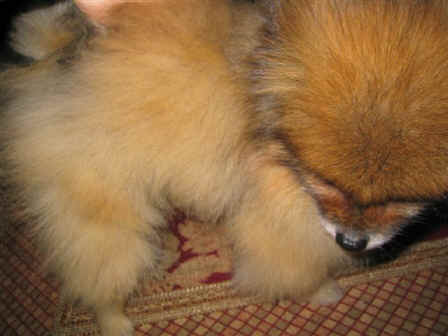

|
|
Yet another Success Story
I have what I hope will prove to be some very exciting news in
regards to helping our BSD babies. I have a 9 yr old male who was
finally diagnosed with BSD about a year ago. We fought for a long
time with thyroid because that's what they felt was his problem.
Then we found he also had walking dandruff and was treated
successfully for that. To no avail he still was nearly coatless for
more than 6 months. After 2 yrs I finally conceeded that it was
truly BSD. As a wound care nurse I was introduced to a new line of
products this spring. REMEDY.
We have several wonderful skin care products in this line that are
doing remarkable things for people who have severe skin issues. One
of the samples I was given was called Remedy foaming body wash.
These products bind with the skin on a cellular level and help
repair damaged skin. I had one sample that did not get used so I
brought it home in the hopes it would help my naked baby gain some
coat so that I didn't have to worry so about exposure to the
elements. Well, boy howdy was I shocked.
I started treating him with weekly baths mid May. I took him to the
Greeley shows last weekend to show people what an amazing recovery
he is making. He started recoating right away. He is getting it
back just the reverse of how he lost it. Body coat is normal
texture and almost as good as when he was showing. He is a Ch by
the way, my very first. It is now August and the only place he does
not have hair is a small strip at the base of his tail and down each
thigh. Even these are continuing to grow hair at an amazing rate.
His color started out very pale but it now turning a nice rich
orange.
He is an orange sable. I am going to try to keep this going for
some time with his progress but I felt it was such a remarkable
change that I needed to share it with any of you who would wish to
try the same thing. I felt that due to the long exposure to the sun
and other elements that there had to be skin damage is why I tried
and I feel that I hit a key. I will continue to monitor and report
his progress or regression. I know several have had dogs recoat and
then lose it so will be sure to report that also. I don't think it
is going to happen.
If you would like to purchase and try this product it is available
online. Look up Remedy skin products and request Remedy foaming
body wash. I also use the remedy skin repair cream between baths
just to help keep the sun from doing any more damage to his skin.
The products are very reasonable to purchase. I hope some of you do
try it and have the same success as I have had. It would be
wonderful to not have to worry about our babies so much. It is
always hard to see a nice dog without his reigning glory.
Wishing all of you good luck if you try it.
Thanks
"Carol Wittrock" <cwittrock@netcommander.com> |
|
Back to List of
Titles
|
|
|
©
Copyright 2000
Pomeranian
Club of
Canada
All Rights Reserved
|